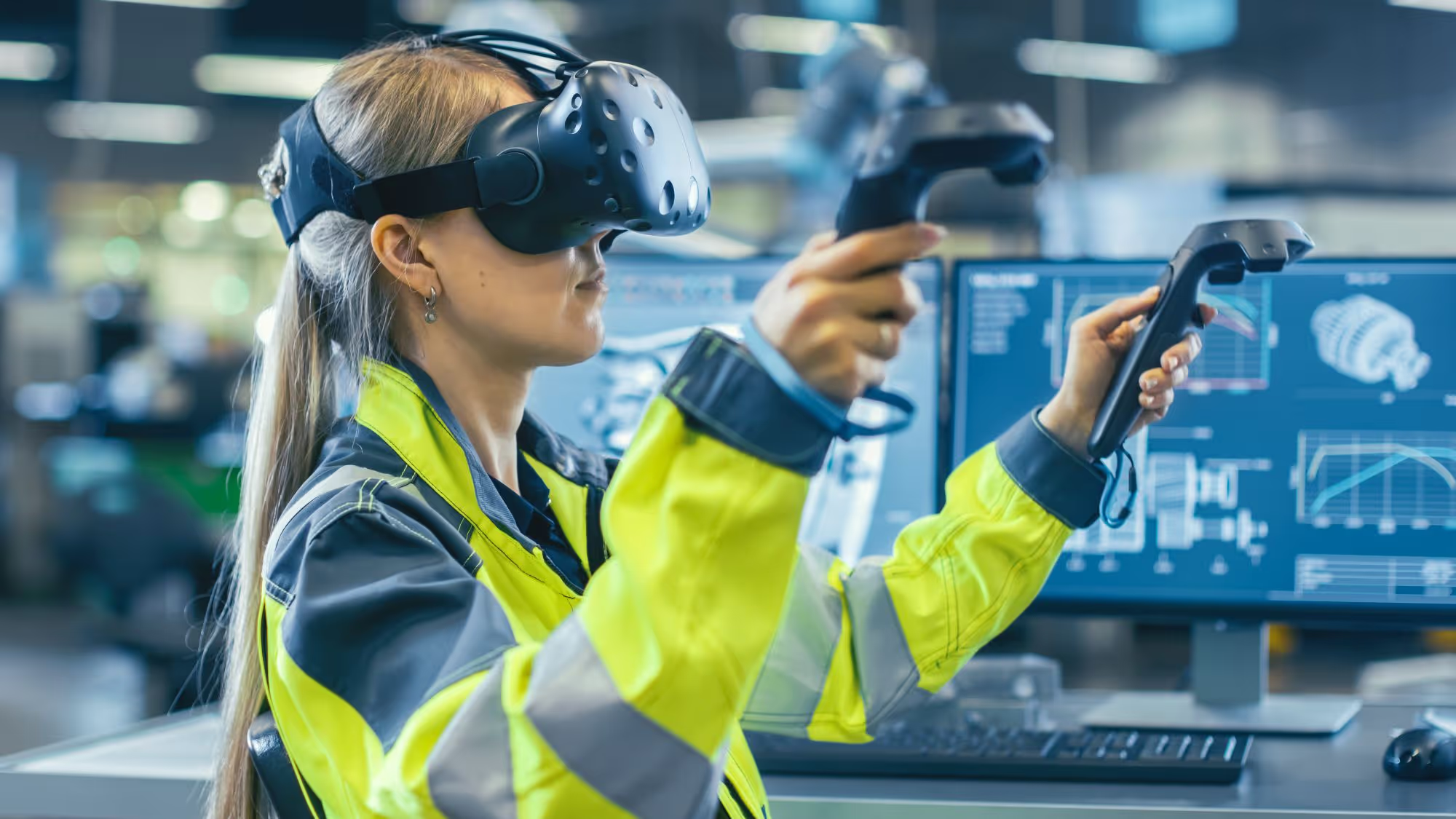
We bridge the gap between theory and technical mastery. Our immersive platforms utilize VR, AR, and MR to transform how your workforce interacts with complex machinery, ensuring higher retention and zero-risk learning.
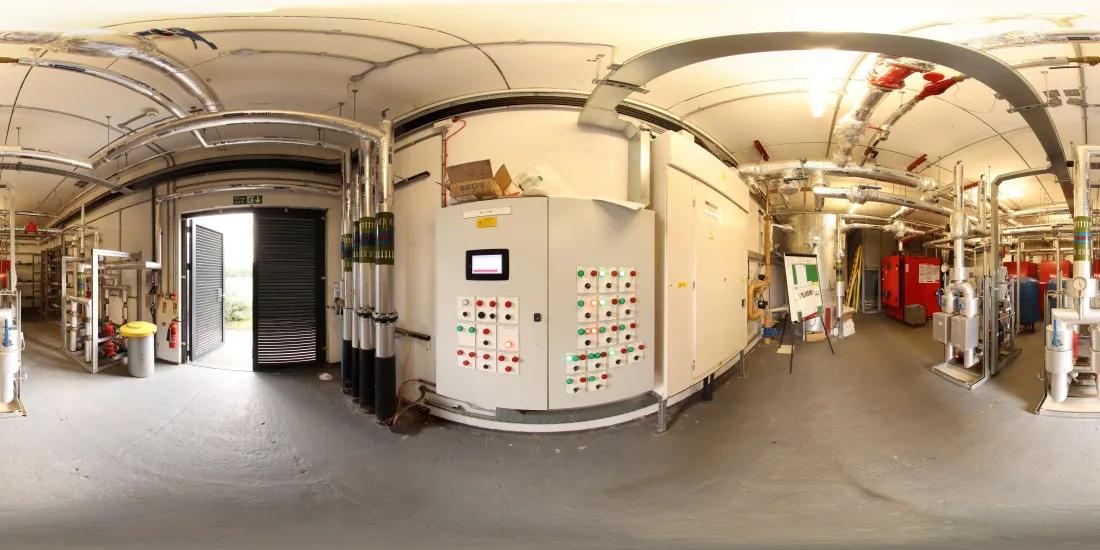
1. Spatial Awareness & Standard Procedures (360°Environments)
Master the environment before stepping onto the floor.
Contextual Learning: Interactive walkthroughs of facilities and workspaces.
Rich Media Integration: 360° high-fidelity renders embedded with live technical manuals, safety videos, and documentation. Universal Access: Deployable via web browser, mobile devices, or VR headsets for training anywhere, anytime.
2. Precision & Risk-Free Practice (Virtual Reality)
Convert 'muscle memory' into operational excellence.
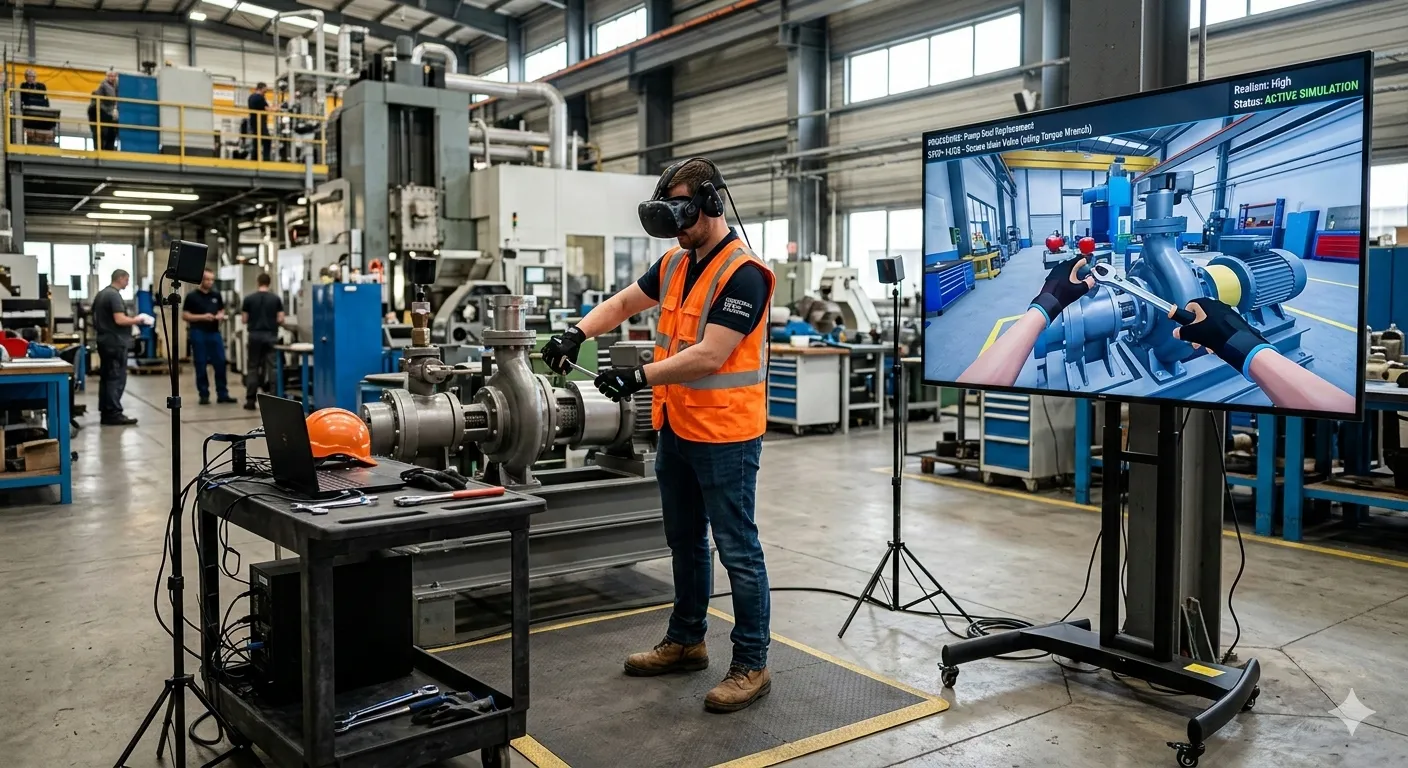
High-Stakes Simulation: Realistic 3D environments to practice critical procedures without risking equipment or safety.
Advanced Haptics: Industry-leading hand-tracking for tactile, tool-based realism.
Data-Driven Insights: Comprehensive performance analytics, including completion time, error rates, and situational awareness (distraction tracking).
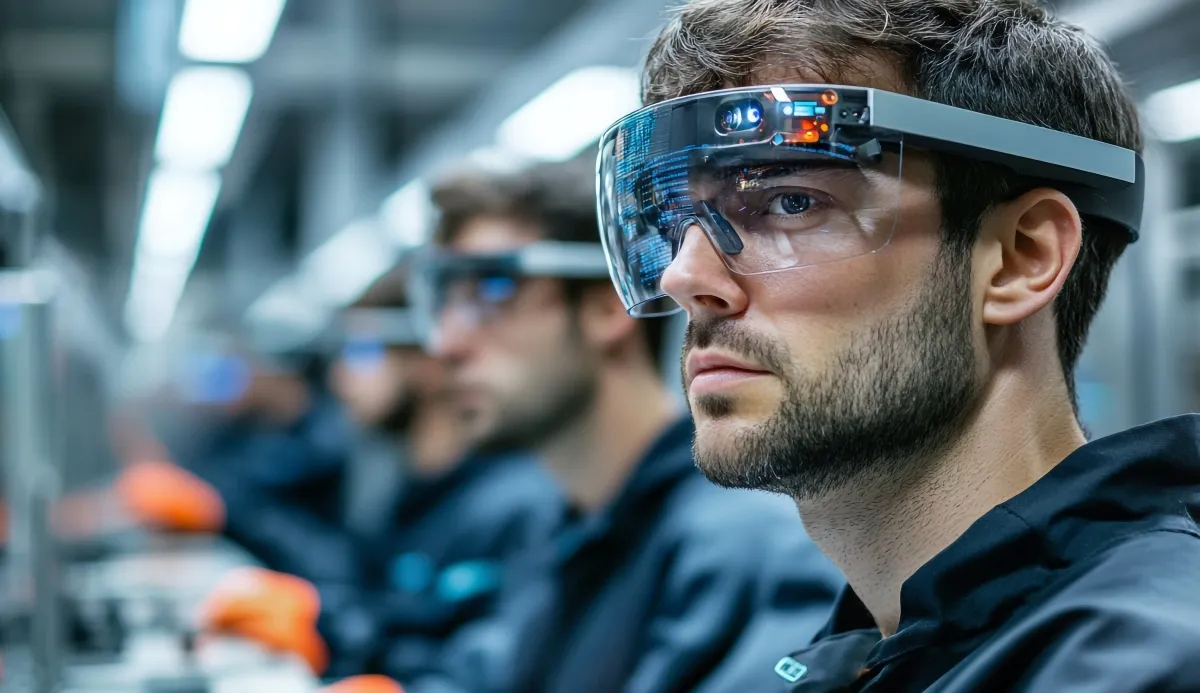
3. Operational Excellence in Real-Time (Mixed Reality)
The digital twin, right before your eyes.
Live Overlays: Digital blueprints and data visualizations mapped directly onto physical machinery.
Guided Execution: Real-time, step-by-step AR instructions that eliminate "guesswork" and drastically reduce human error.
Seamless Transition: Accelerate the move from trainee to expert by providing a safety net during live operations.
| Benefit | Outcome |
|---|---|
Safety First | Zero-risk exposure to hazardous environments. |
Cost Efficiency | Reduce the need for physical prototypes and trainer travel. |
Retention | 75% higher retention rates compared to traditional classroom methods. |
Experience the power of touch in a digital world.
While visual immersion is vital, Haptic Technology adds the critical third dimension: physical sensation. By simulating the "feel" of industrial operations, we enable trainees to develop genuine muscle memory and intuitive technical skills in a safe, controlled environment.
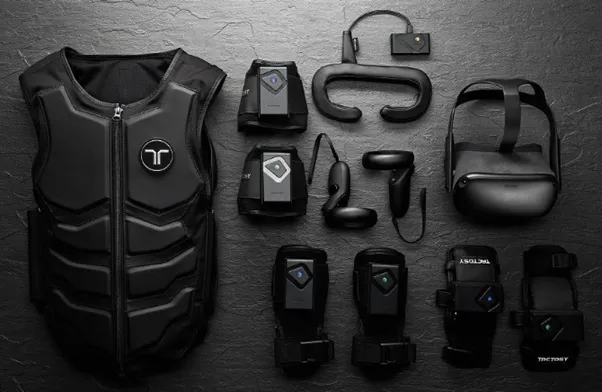
Sensory Realism & Technical Mastery
Instant Tactile Feedback: High-fidelity haptic pulses provide immediate confirmation of actions—such as the click of a locking mechanism, the resistance of a valve, or the vibration of a functioning engine.
Full-Body Immersion: We integrate a suite of specialized wearables—including precision gloves, haptic vests, wristbands, and ankle sensors—to map physical sensations across the body, grounding the user in the digital workspace.
Biometric Reinforcement: Sensory input bridges the gap between simulation and reality, significantly increasing learning retention and reducing the "shock" of first-time real-world operation.
Key Benefits for Your Workforce
Enhanced Precision: Trainees learn the exact pressure and movement required for delicate procedures.
Safety Alerts: Use directional haptic cues (vibrations) to warn users of proximity to hazards or procedural errors.
Dynamic Engagement: Increases user focus and reduces "simulation fatigue" by making the virtual world feel tangible and reactive.
"Haptics transform 'watching' into 'doing.' By engaging the sense of touch, we reduce the cognitive load on trainees and accelerate the transition to high-stakes machinery."
| Key Performance Indicator | Standard VR (Visual/Audio) | Haptic-Integrated VR (Tactile) | Industrial Impact |
|---|---|---|---|
| Error Reduction Rate | ~30% reduction vs. traditional | ~60-80% reduction | Minimizes costly "guesswork" on live machinery. |
| Skill Acquisition Speed | Moderate (Cognitive learning) | Accelerated (Muscle memory) | Reduces total training hours per employee. |
| Procedural Precision | Low (Visual estimation) | High (Physical resistance) | Critical for tasks requiring specific torque or pressure. |
| Hazard Awareness | Visual warnings only | Immediate tactile alerts | Instinctive reaction to "danger zones" or vibrations. |
| Knowledge Retention | ~75% after 3 months | ~90%+ after 3 months | Sensory engagement creates deeper neural pathways. |
| Simulation Fatigue | Higher (Visual-only strain) | Lower (Sensory balance) | Trainees remain focused for longer, more complex sessions. |
The "Muscle Memory" Advantage
In standard VR, a trainee might move their hand to "turn" a virtual valve, but there is no physical resistance.
With Precision Haptics, the user feels the weight, the friction, and the "click" when the valve is seated correctly.
Industrial Insight: By simulating the physical consequences of an action (such as the vibration of a misaligned gear), we allow trainees to fail safely and learn the "feel" of a problem before it occurs on the actual plant floor.
Strategic Outcomes for Leadership
Reduced Rework: Workers arrive on-site with "hands-on" experience, leading to "Right First Time" execution.
Lower Insurance Premiums: Demonstrable improvements in safety training can often lead to reduced liability costs.
Maintenance Optimization: Technicians can practice complex teardowns in a tactile environment, reducing the risk of damaging expensive components during real-world maintenance.
CASE STUDY: Precision Maintenance & Safety Transformation
The Challenge: Reducing Downtime in High-Stakes Environments
A global leader in the industrial sector faced significant challenges training new technicians on high-pressure pump maintenance. Traditional training required taking physical assets offline, costing thousands in lost production, while still resulting in a 15% error rate during the first live maintenance cycle due to a lack of tactile experience.
The Solution: Haptic-Integrated VR Training
We deployed a custom Mixed Reality & Haptic environment that mirrored the exact specifications of the facility’s machinery.
Tactile Feedback: Technicians used haptic gloves to feel the torque required for bolt tightening and the specific vibration signatures of mechanical misalignment.
Risk-Free Failure: Trainees practiced emergency shutdown procedures, receiving instant physical alerts when entering "hazard zones.
"The Results: "Precision at Inception"
By shifting to an immersive tactile platform, the client achieved:
*85% Reduction in Equipment Downtime: Assets remained operational while training occurred in the virtual twin.
*40% Faster Onboarding: Technicians reached operational competency nearly twice as fast as the previous classroom-and-shadowing model.
*Zero Initial-Cycle Errors: The first live maintenance performed by the "Haptic-Trained" cohort was completed with 100% accuracy, achieving a "Well Done First Time" milestone.
Executive Takeaway
"By integrating haptics, we didn't just teach our team what to do—we taught their hands how to do it. The transition to the field was seamless because they had already 'felt' the job a hundred times."— Project Director, Industrial Infrastructure